
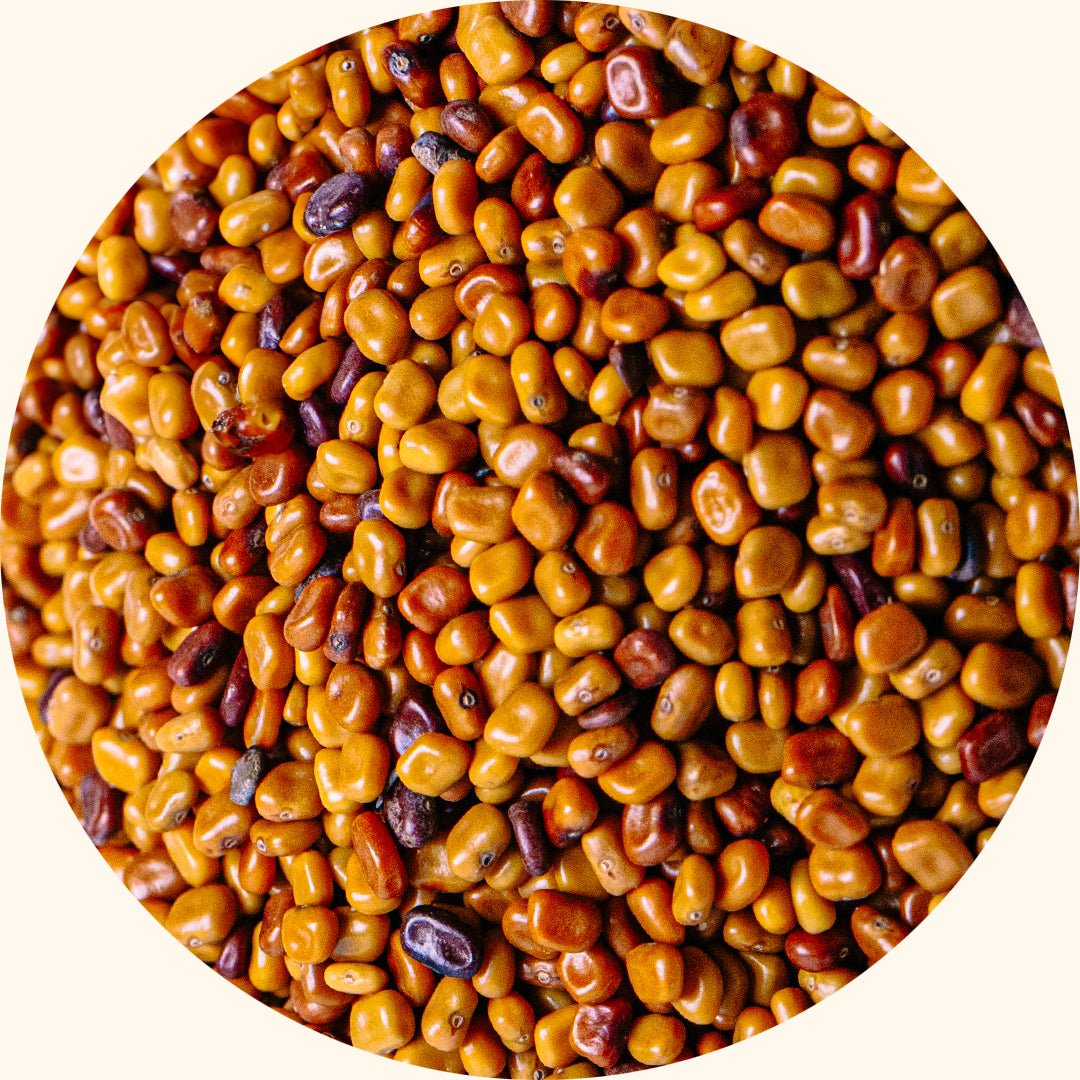
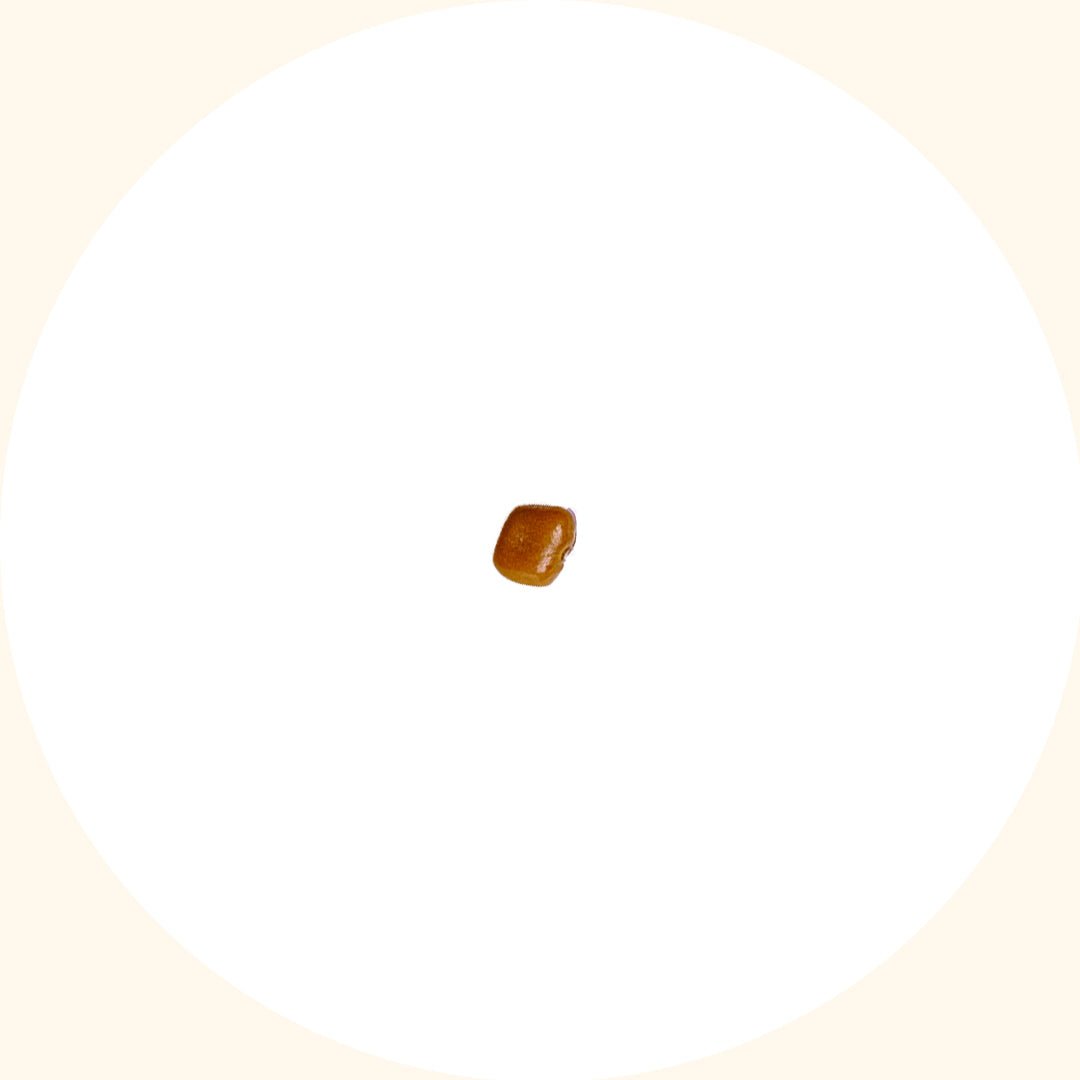
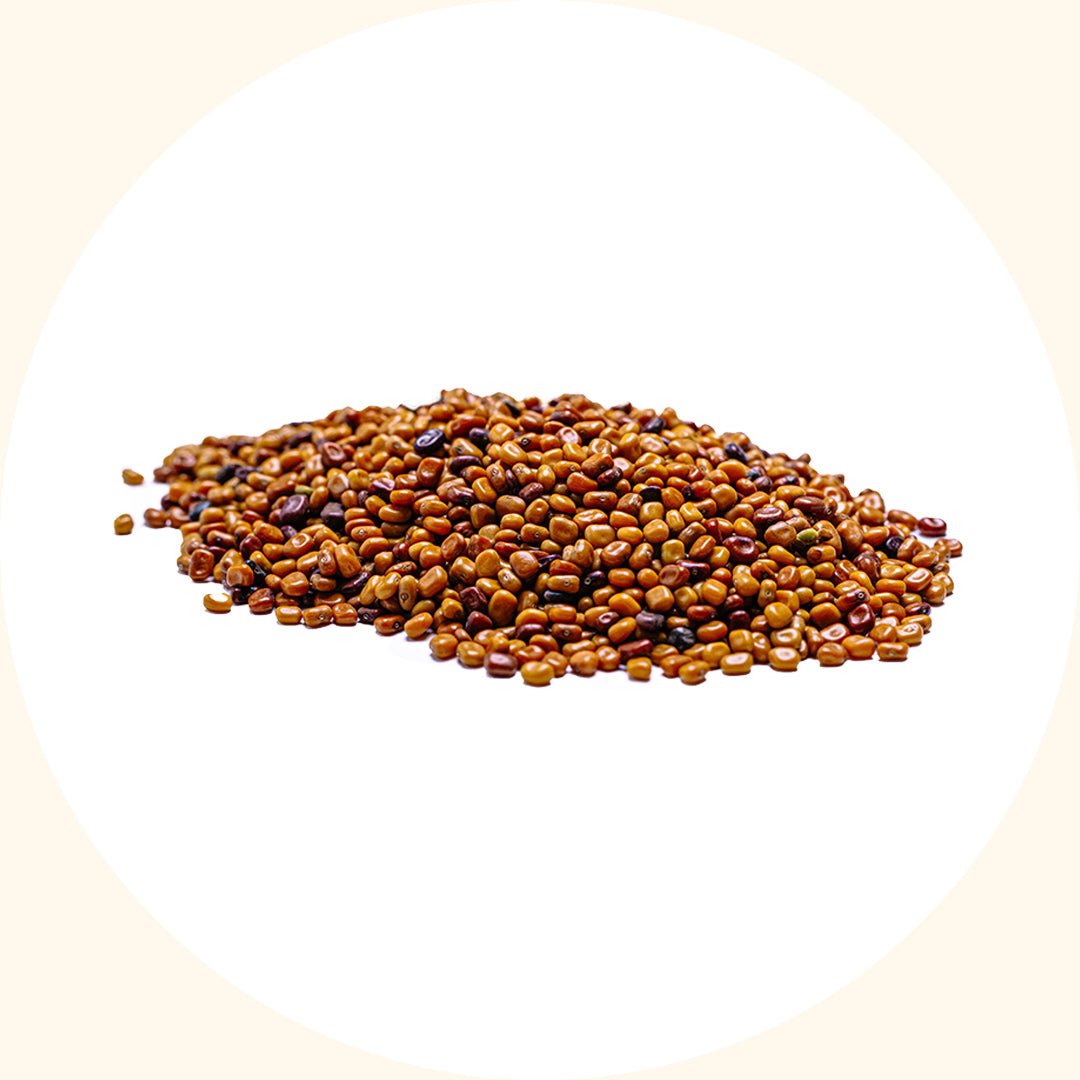
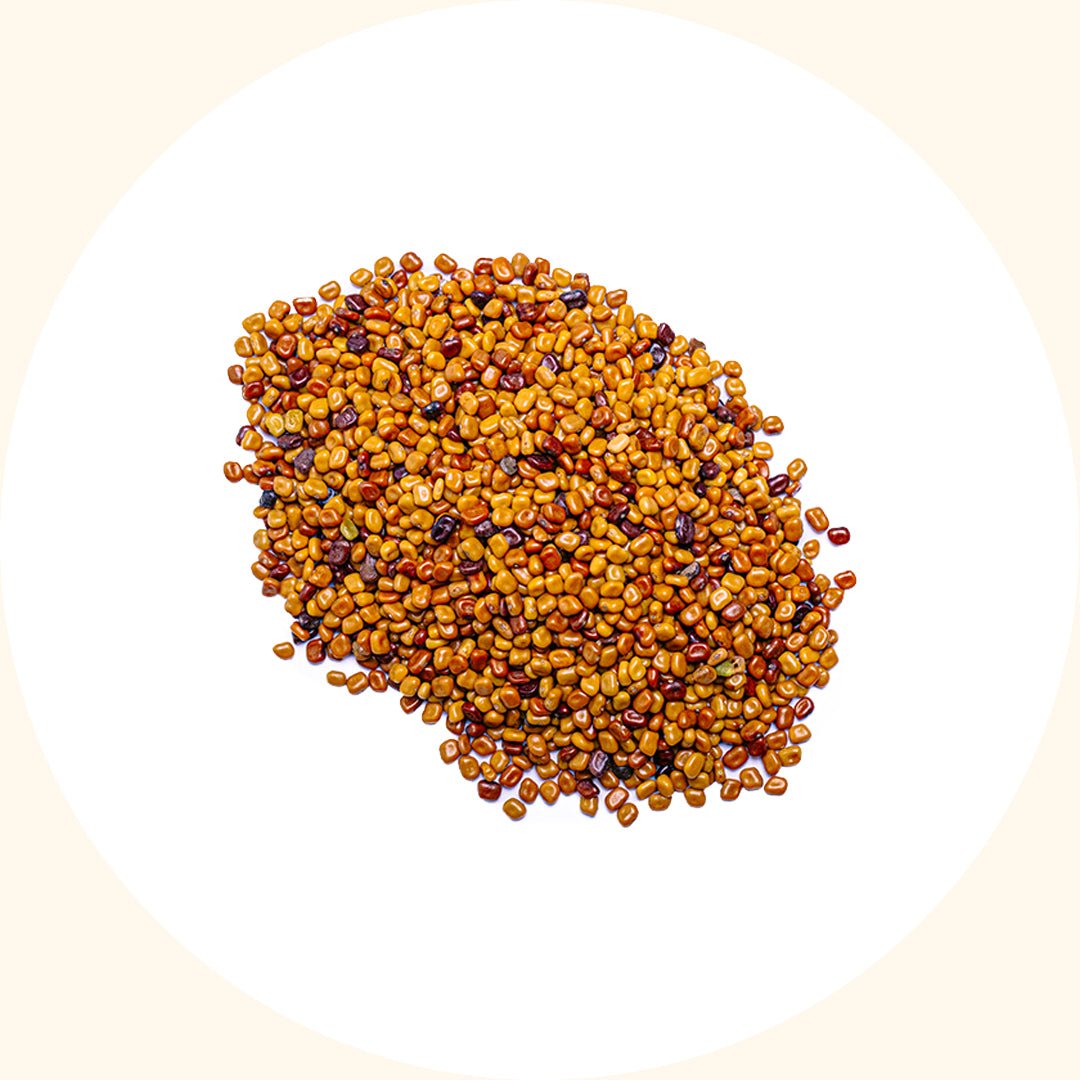
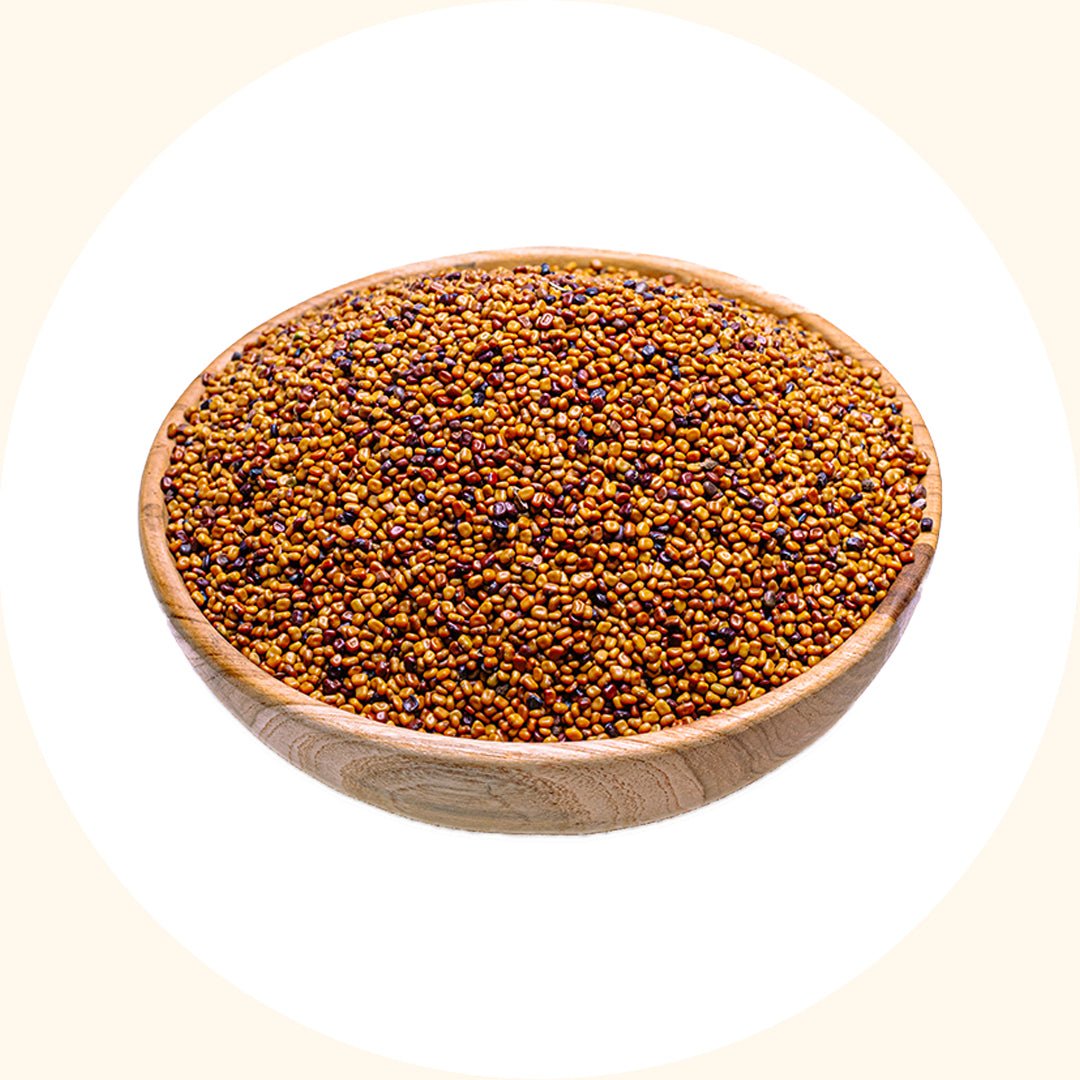
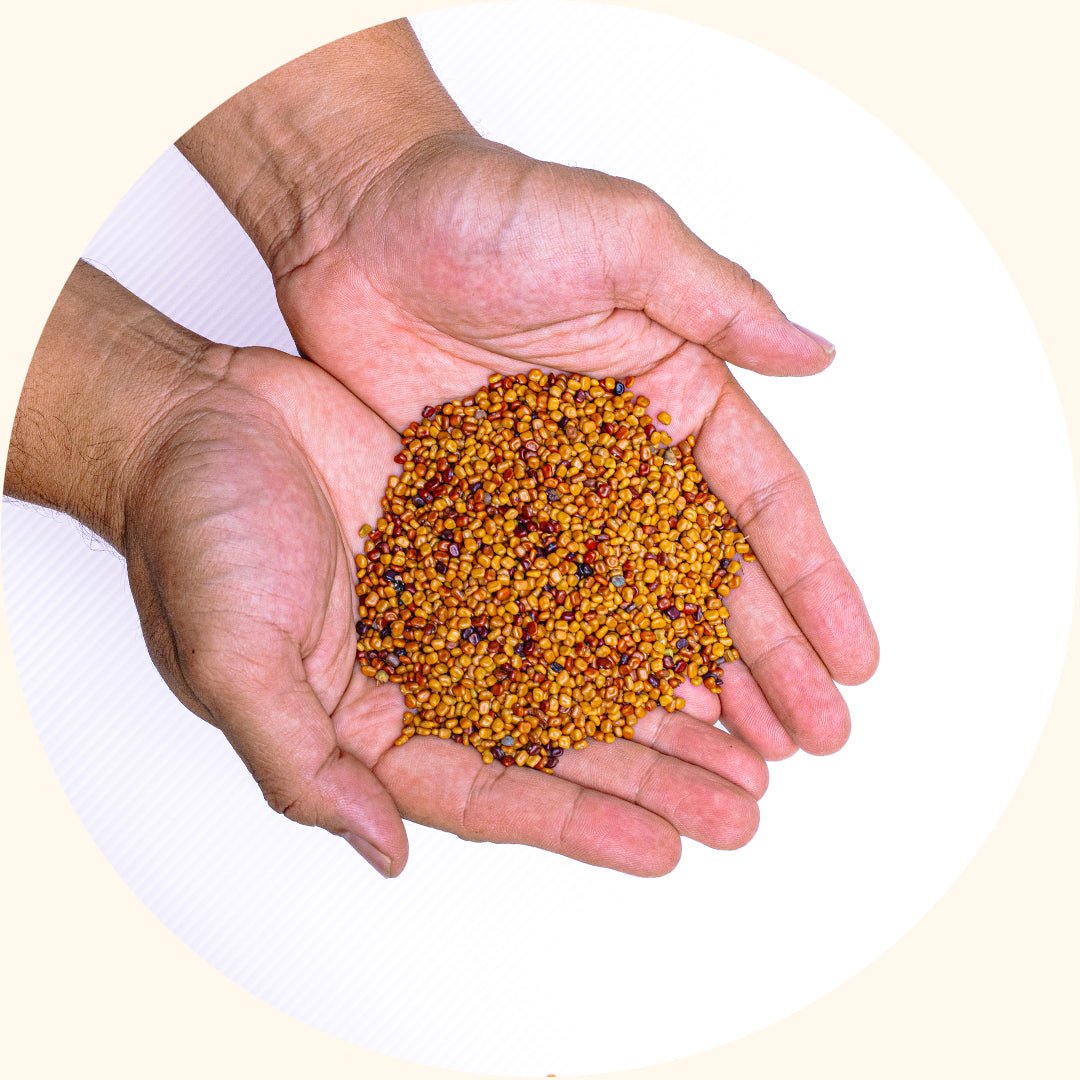
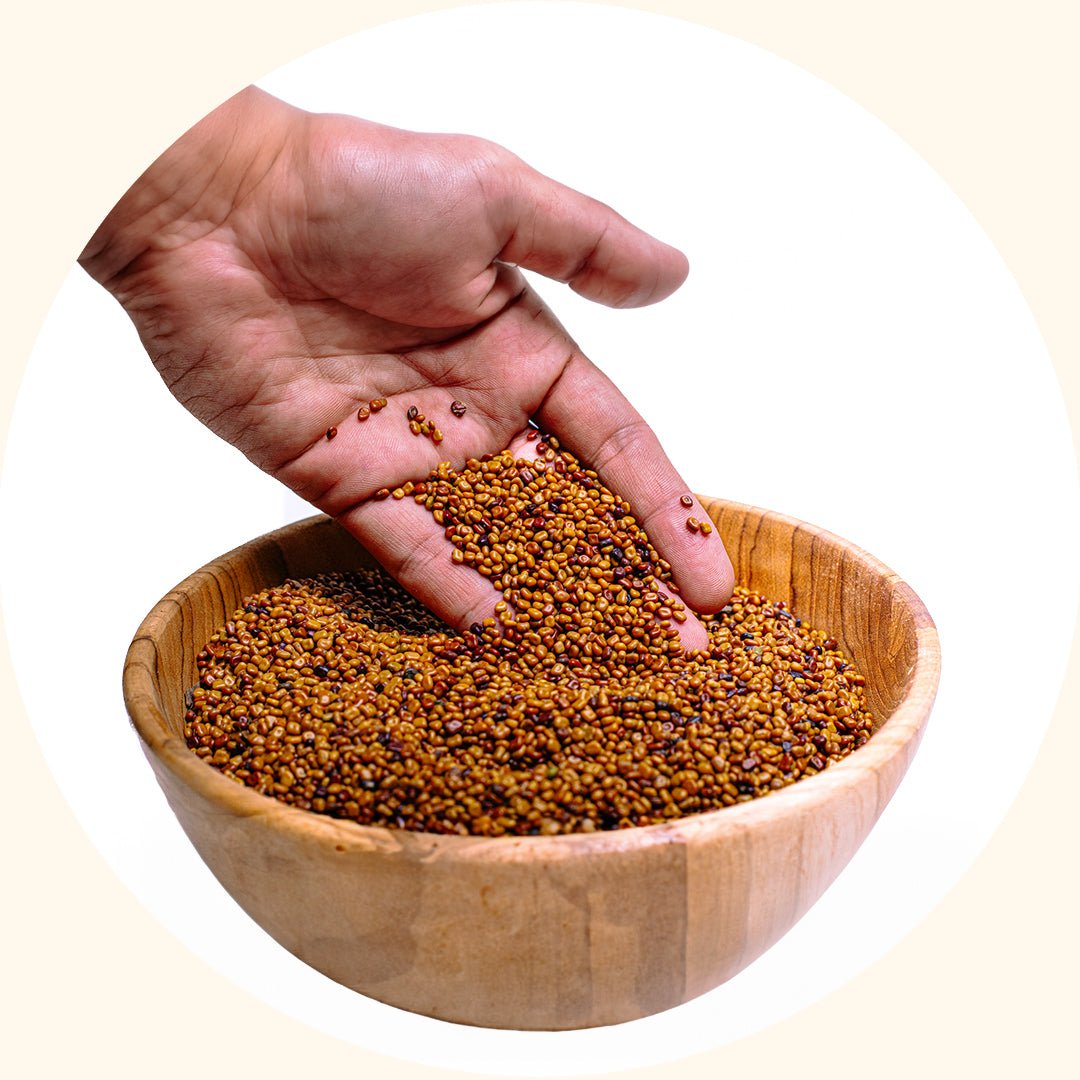
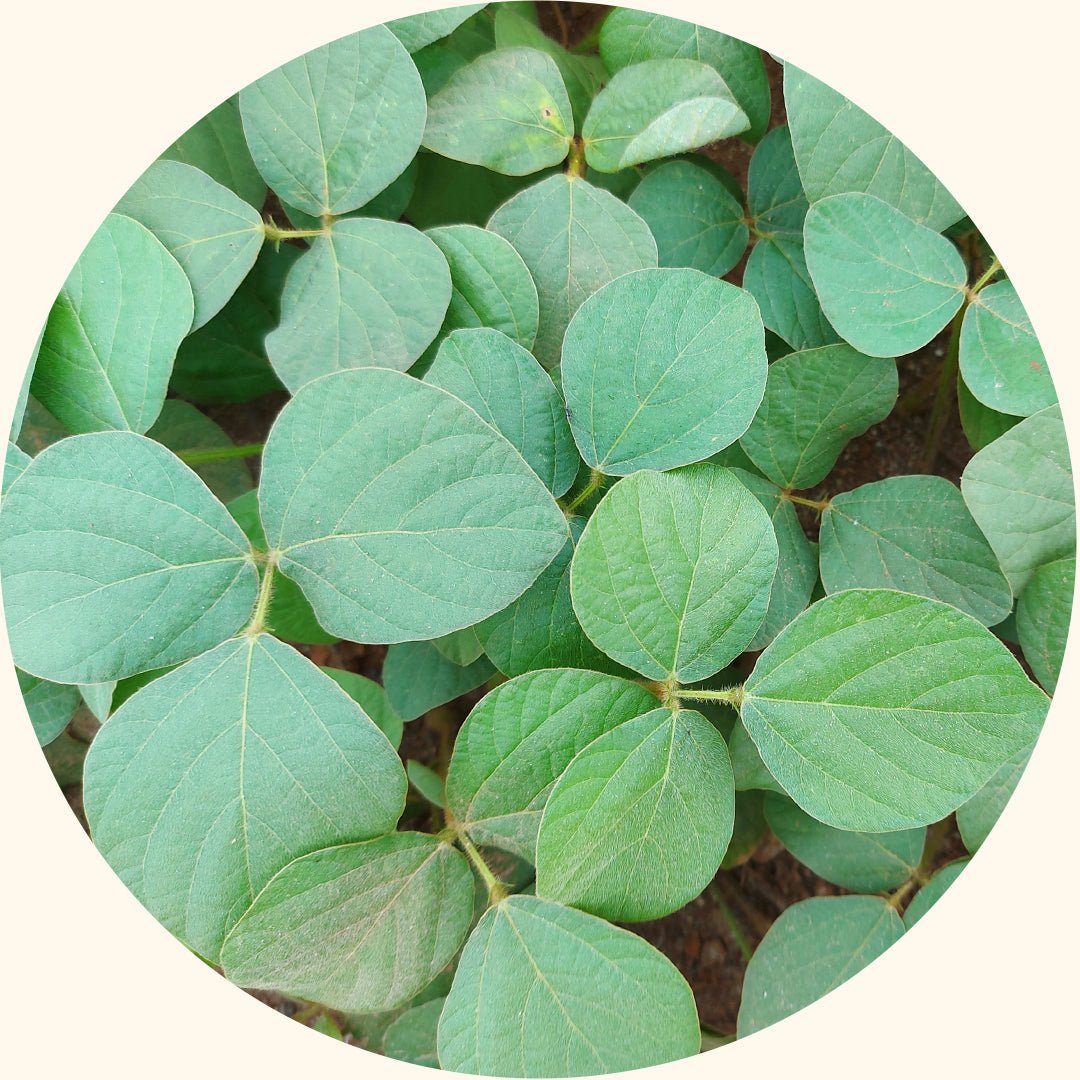
What is Calopogonium mucunoides (CM) and who is it for?
Calopogonium mucunoides is a fast-establishing creeping legume used as a pioneer cover crop in oil palm, rubber and coconut plantations. It covers the soil 3 to 6 months after sowing, sooner on newly cleared fertile land, and forms a dense sward at 4 to 5 months (PROSEA 11), which makes it valuable for early weed suppression and soil protection. CM tolerates acid clay soils. However, CM is short-lived, about 1 to 2 years, and is usually the first species to be shaded out in mixtures, and it does not perform well under prolonged dry conditions or deep shade.
Quick facts: Calopogonium mucunoides (CM)
| Scientific name | Calopogonium mucunoides |
|---|---|
| Growth habit | Creeping/twining annual to short-lived perennial legume |
| Seeding rate (published) | No stand-alone published rate; sown in mixtures such as calopo:centro:kudzu 5:4:1 at 2 to 5 kg/ha in the inter-row (PROSEA 4) |
| Soil | Acid clay soils |
| Shade tolerance | Moderate; first to be shaded out in mixtures |
| Drought tolerance | Low (prefers wet tropical conditions) |
| Annual N fixation rate | No verified species-specific rate |
| Biomass-N stock (kg N/ha) | Not established |
| Time to ground cover | Covers the soil 3 to 6 months after sowing; dense sward at 4 to 5 months (PROSEA 11) |
Where does Calopogonium mucunoides (CM) work best?
Best for
- Fast initial ground cover in new plantings
- Acid clay soils
- Wet tropical sites with reliable rainfall
- Plantation legume mixtures (commonly with PJ and CP)
- Coconut basin cover (Thomas and Shantaram 1993 protocol)
Not ideal for
- Prolonged dry conditions
- Deep-shade permanent cover requirements
- Sites needing long-term persistent cover without re-establishment
- Standalone cover in mature closed-canopy systems
What Calopogonium mucunoides (CM) will not do
There is no published evidence here that CM increases coconut copra yield or rubber latex yield. CM lives about 1 to 2 years (PROSEA 11) and is usually replaced by the longer-lived species in the mixture. It is most effective as a pioneer component in legume mixtures rather than as a standalone permanent cover.
How to establish and use Calopogonium mucunoides (CM)
No stand-alone published seeding rate for CM is on our evidence list, so the rate for your site is confirmed on the quotation or entered from your own programme. In mixtures, PROSEA 4 (1992) gives calopo:centro:kudzu 5:4:1 or centro:kudzu 4:1 at 2 to 5 kg/ha in the inter-row. CM establishes faster than most legume cover crops, which makes it the pioneer species in a mixture while slower species such as PJ and CP establish. For coconut basins, follow the Thomas and Shantaram 1993 protocol. Scarification may improve germination uniformity.
What does the research say about Calopogonium mucunoides (CM)?
- PROSEA 11 (Chen Chin Peng and Aminah, 1997): CM covers the soil 3 to 6 months after sowing, sooner on newly cleared fertile land, forms a dense sward at 4 to 5 months, lives 1 to 2 years and is the first to establish and the first to be shaded out in mixtures.
- PROSEA 4 ('t Mannetje and Jones, 1992): calopo:centro:kudzu 5:4:1 or centro:kudzu 4:1 mixtures at 2 to 5 kg/ha in the inter-row.
- Thomas and Shantaram (1993), CORD 9(1): 34: CM and PJ grown in coconut basins in laterite soil in Kerala, India (25 g seed per basin, tops harvested 120 days after sowing).
- No verified species-specific nitrogen figure is published for CM.
Frequently asked questions about Calopogonium mucunoides (CM)
How fast does Calopogonium mucunoides establish compared to other cover crops?
CM is one of the fastest-establishing legume cover crops for tropical plantations. It covers the soil 3 to 6 months after sowing and forms a dense sward at 4 to 5 months (PROSEA 11), earlier than PJ or CP, which makes it valuable as a pioneer species where early weed suppression is a priority.
What seed pre-treatment does CM need?
Scarification may improve germination uniformity. Mechanical or acid scarification helps overcome hard-seed dormancy; ask us whether your seed lot needs it when you request a quotation.
Is Calopogonium mucunoides suitable for acidic soils?
Yes. CM tolerates acid clay soils, which are common in many Malaysian plantation regions. Confirm with your soil test.
Can CM be used alone or should it be in a mixture?
CM is most effective as part of a legume mixture rather than as a standalone permanent cover. Because CM lives about 1 to 2 years (PROSEA 11), pairing it with longer-lived species like PJ or CP gives both fast initial cover from CM and long-term persistence from the companion species.
What to include in your inquiry
To prepare your quotation, please include:
- Your plantation crop (oil palm, rubber, coconut)
- Soil type and approximate pH
- Annual rainfall pattern
- Planting area in hectares
- Whether you plan to use CM alone or in a mixture
- Your location (country and region)
Request a quotation, or contact us via WhatsApp: +60 17-237 4058
Sold by quotation only. Price, minimum order and lead time are confirmed on the quotation.
Chemiseed Sdn. Bhd.
Compare with related products
Documents available
Technical Data Sheet (TDS), Certificate of Analysis (COA) with germination data, Safety Data Sheet (SDS) where applicable, and, for export, a phytosanitary certificate issued by the Department of Agriculture Malaysia (DOA) are available on request. Seed lots are germination- and purity-tested to ISTA and AOSA methods.
Limitations and site considerations
Field results depend on crop system, soil, rainfall, planting method, seed quality, storage, timing, and post-establishment management. Adjust recommendations to local conditions, and contact us before ordering if you are unsure about crop fit, application rate, or site suitability.
Seeding a slope or embankment?
On road cuttings, embankments and riverbanks, lay coconut fibre net (coir netting) over the seeded slope so heavy rain does not wash the seed away before it establishes. The net and this seed can go on one quotation.