Woven coir netting that holds soil and seed on bare slopes until vegetation establishes
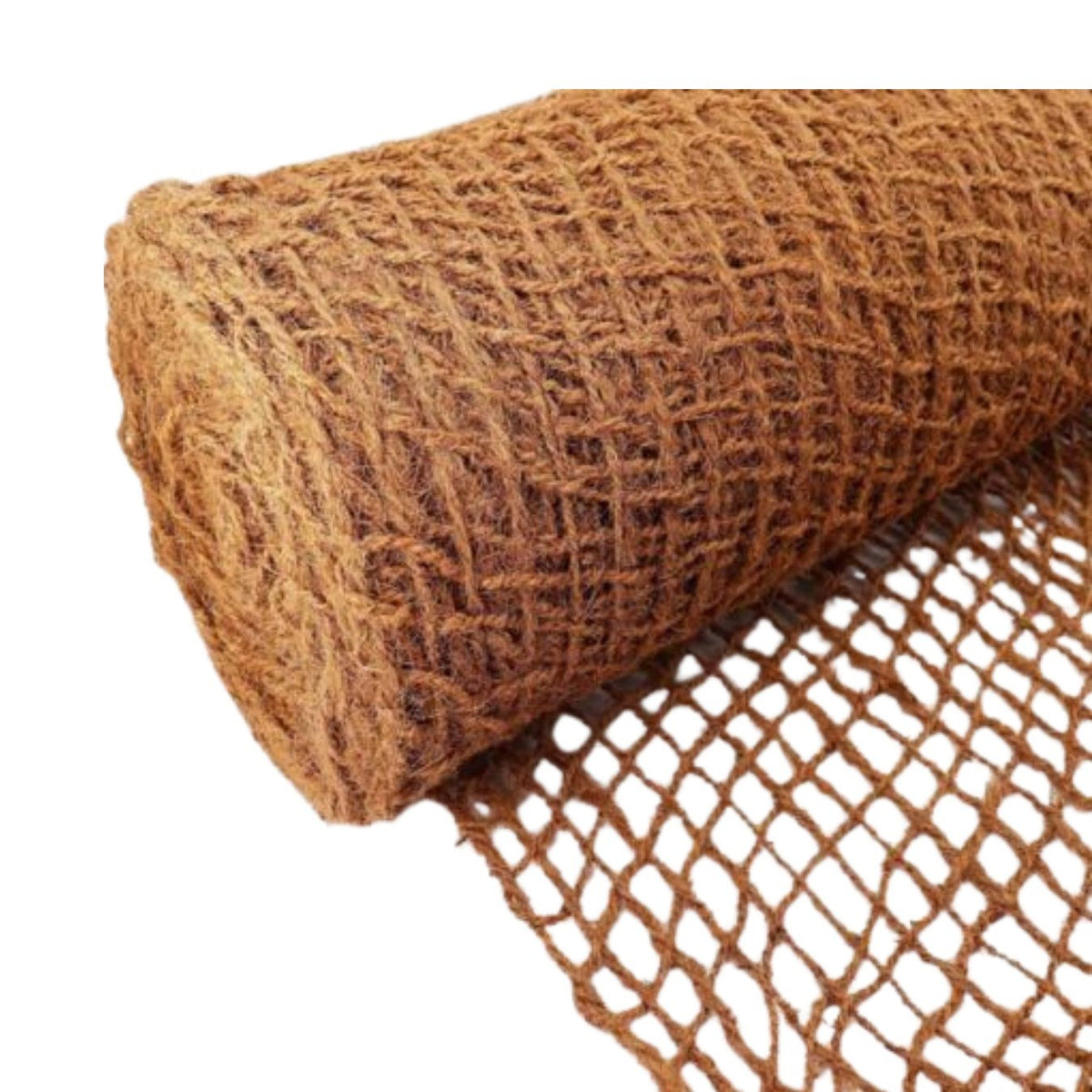
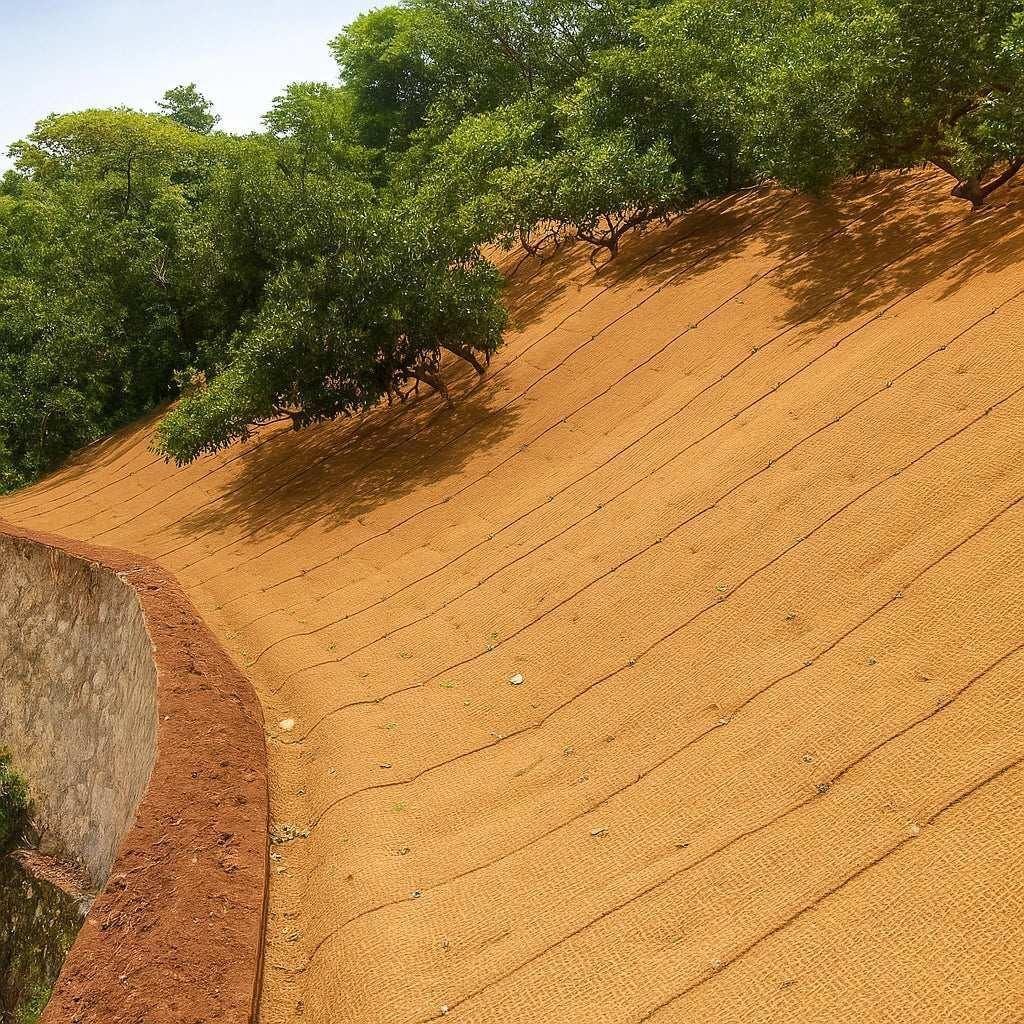
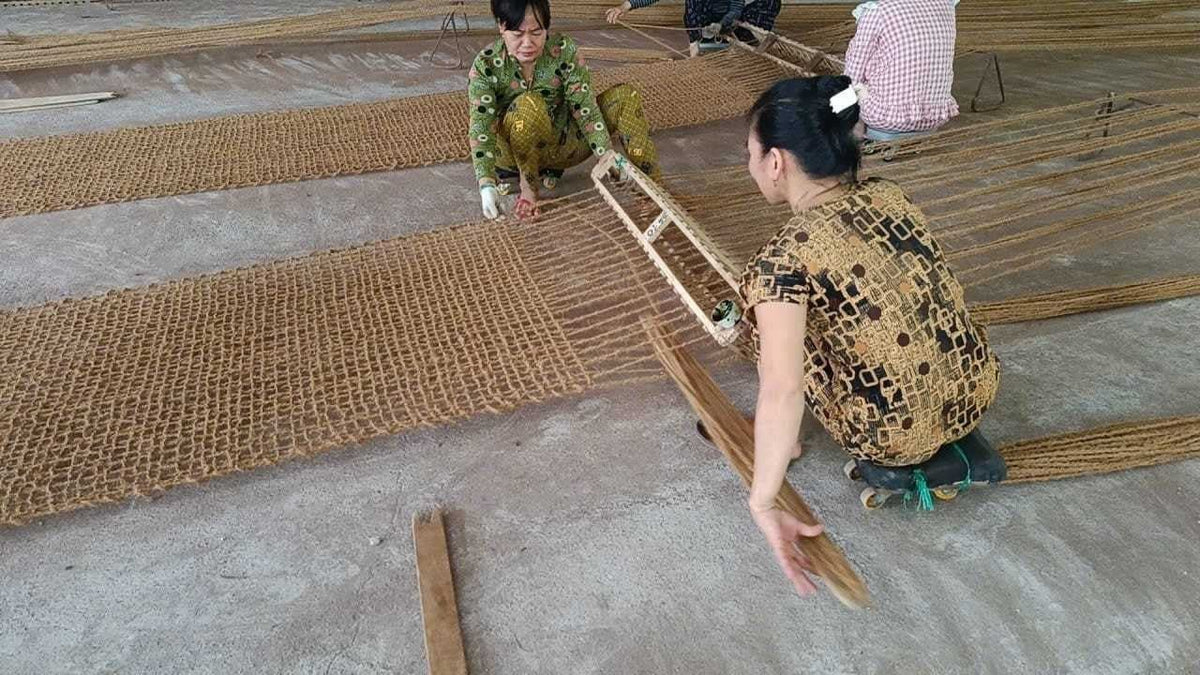
Coconut fibre net, also called coir netting or coconet, is an open-weave net made from coconut husk fibre. Laid over bare slopes, embankments, road cuttings and riverbanks, it protects exposed soil against rain, surface runoff and wind, and keeps seed and topsoil in place until vegetation establishes. It then breaks down, returning organic matter to the soil.
Chemiseed Sdn. Bhd. supplies coconut fibre net in rolls of 1 m × 50 m by quotation, alongside the legume cover crop seed that establishes through it. In Malay it is known as jaring sabut kelapa, and in Indonesia it is sold as cocomesh. Project specifications also call it coir mesh, coir mat or biodegradable erosion control netting.
Where it is used
- Slope and embankment stabilisation
- Erosion control on riverbanks and road cuttings
- Soil stabilisation on post-construction sites
- Landscaping, revegetation and site restoration
- Protection of agricultural land, including plantation slopes
Why a natural fibre net
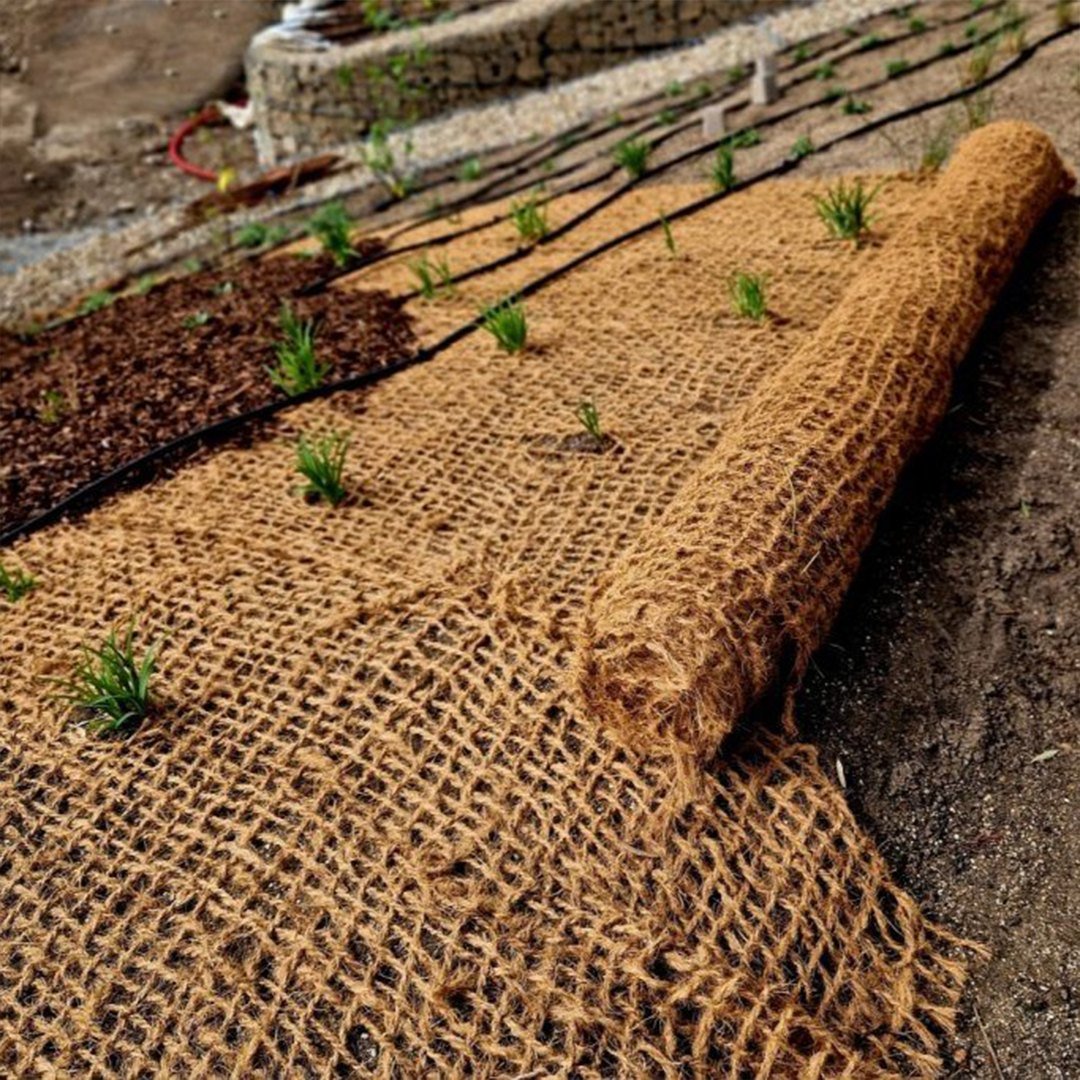
The net works as a temporary skin on the slope. Twisted coir yarn shields the surface from rain and running water, while the open mesh lets light, water and seedlings through. Because coir is a natural fibre, the net biodegrades on site once its job is done, and nothing synthetic is left behind to collect.
Net and seed together
Coir netting holds a slope only until roots take over, so it should go down with a ground cover, never on its own. Sow before laying the net, or into the mesh straight after. Hydroseeding over the pinned net is also common practice.
Chemiseed's five legume cover crops differ in establishment speed, shade tolerance and vigour. Our team will match a species or mix to your slope, rainfall and canopy. Read cover crops for erosion control, compare the species in the cover crop comparison, or estimate soil loss with the soil erosion calculator.
Suitability
Suited to: graded slopes, cut faces and banks where the risk is erosion of the surface layer and planting is feasible.
Not a substitute for: engineered slope repair. If a slope shows tension cracks, bulging or movement, have it assessed by an engineer first. Netting protects the surface only.
Installation guide
- Trim and grade the slope, and remove stones, roots and debris.
- Add topsoil or compost where the surface is poor, then sow the cover crop seed.
- Bury the upper end of the roll in an anchor trench along the crest and backfill.
- Roll the net out downslope, keeping it in close contact with the soil.
- Overlap the edges of adjacent rolls and secure them with wooden pegs or steel U-pins.
- Use the overlap and pin spacing given in your project specification.
Specification
| Material |
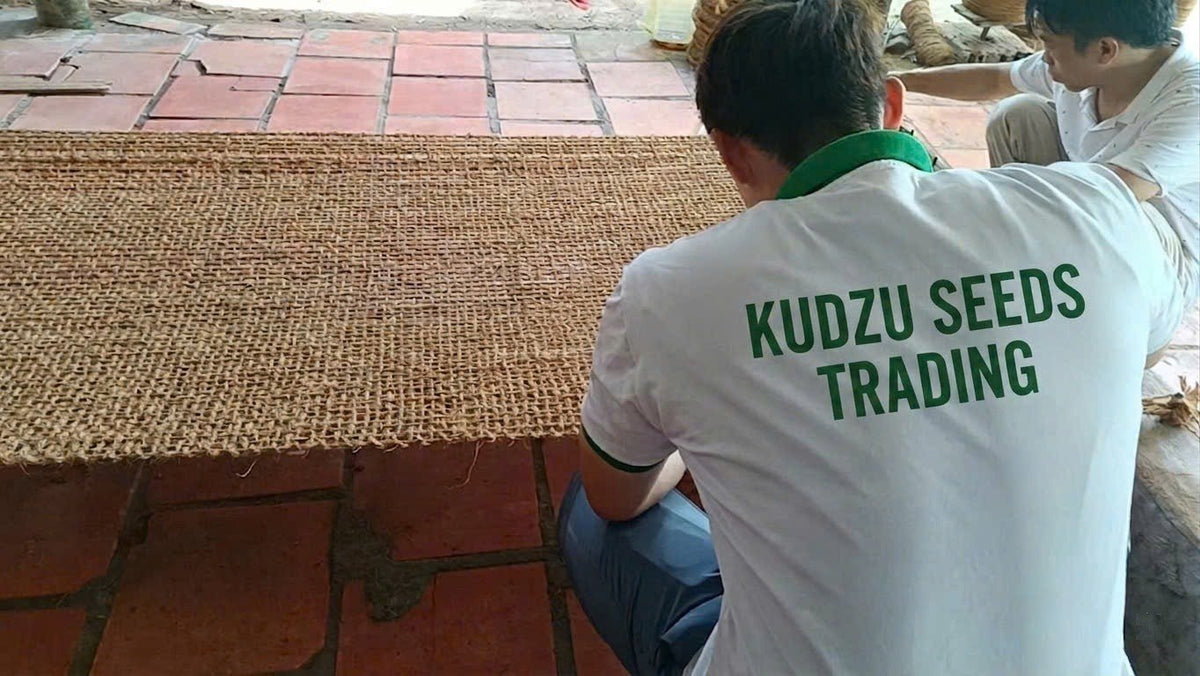
Coconut husk fibre (coir), 100 percent, spun into yarn |
| Weave |
Open mesh |
| Roll dimensions |
1 m × 50 m, giving 50 m² per roll |
| Thread thickness |
5 mm coir yarn |
| Form |
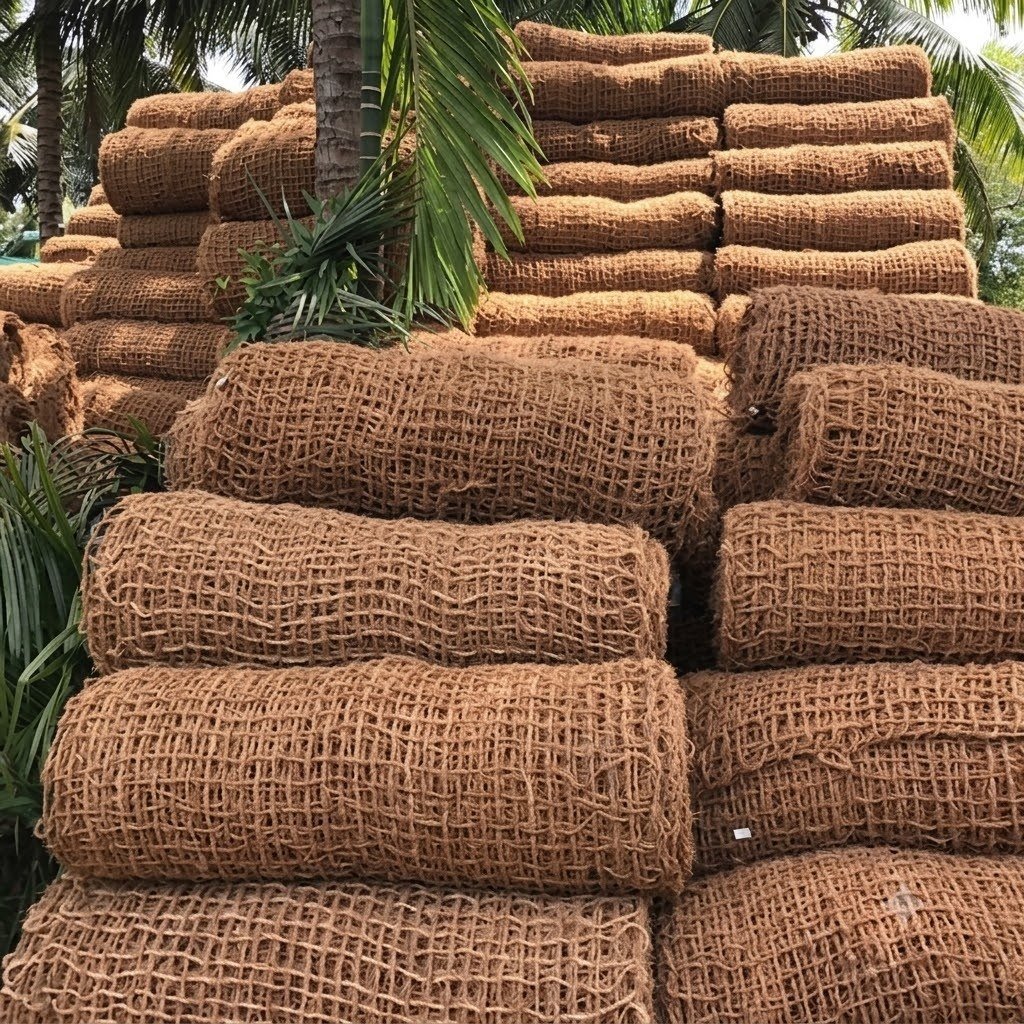
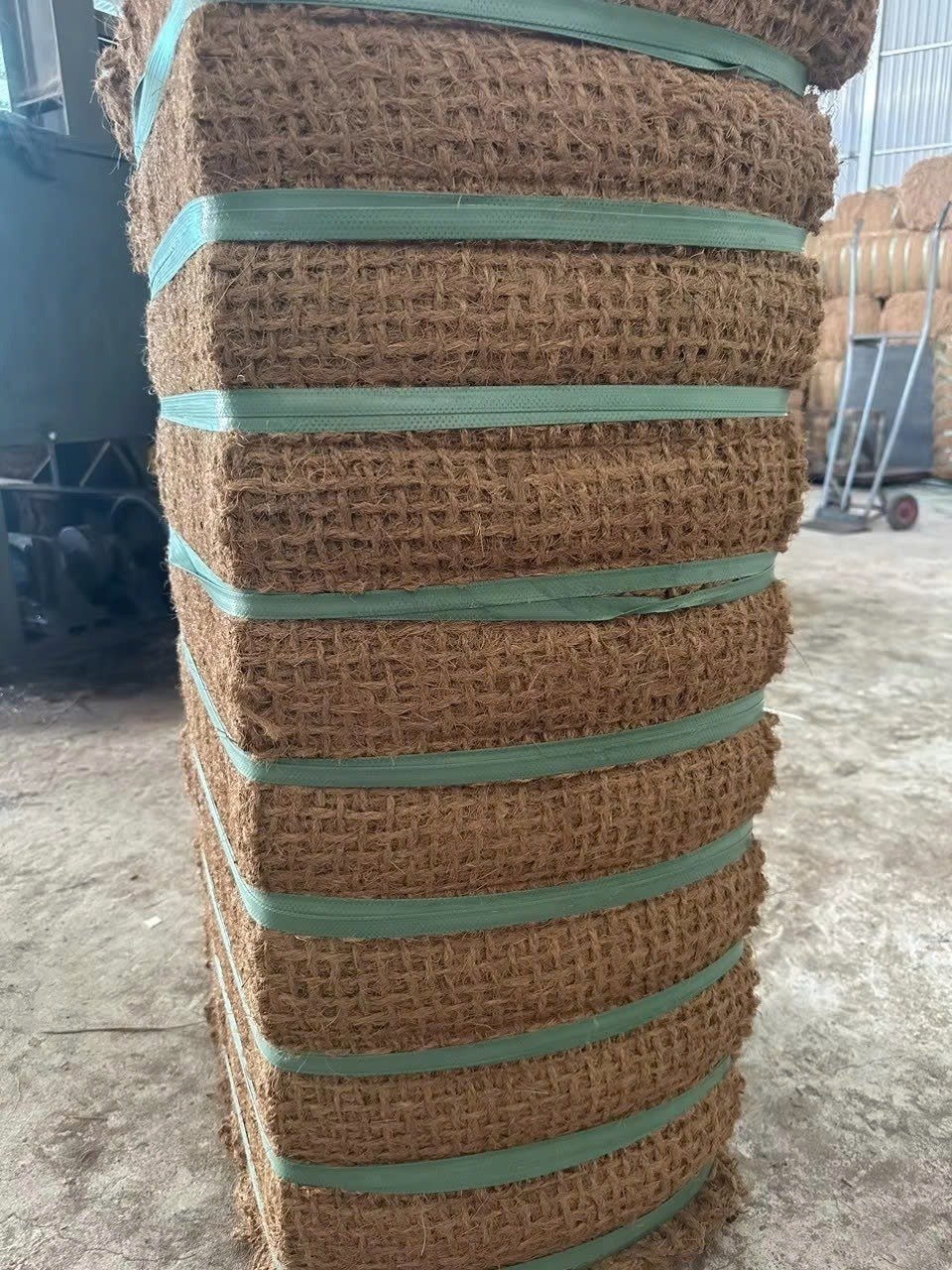
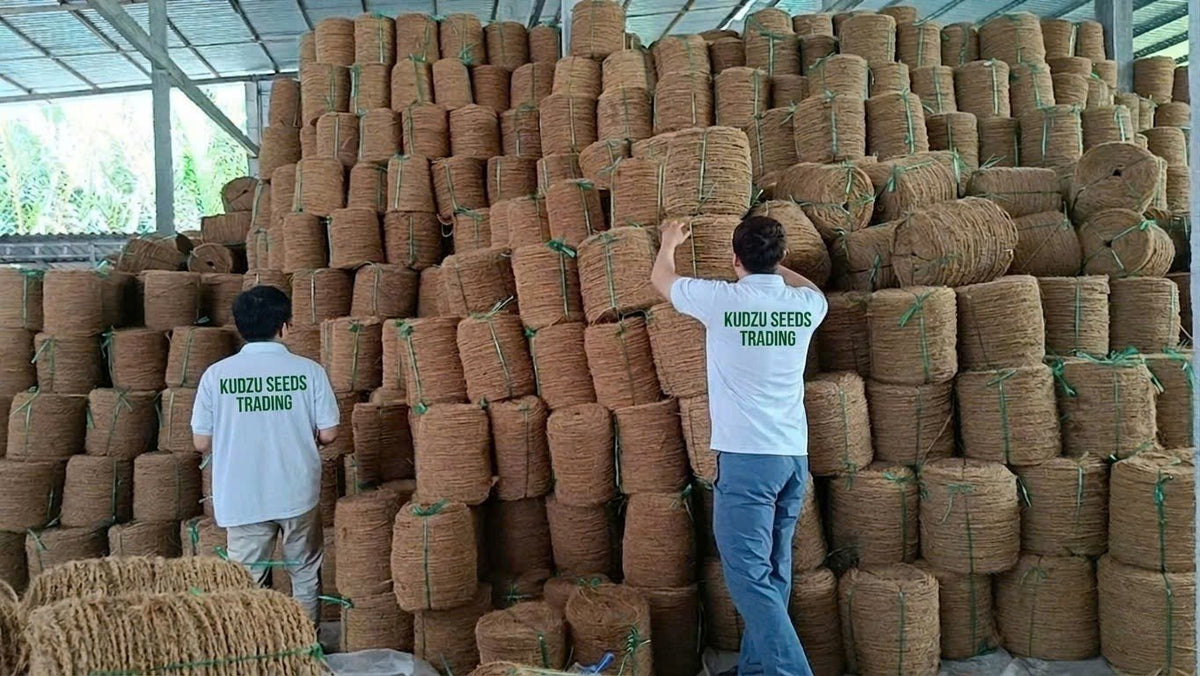
Rolls, strapped in stacks for shipment |
| Country of origin |
Vietnam |
| Mesh (thread count) |
44 × 44 threads per m² |
| Minimum order quantity |
One 20 ft container (298 rolls, 14,900 m²) |
| Biodegradable |
Yes |
Requesting a quotation
Coconut fibre net is supplied by quotation. The minimum order quantity is a full 20 ft container of 298 rolls, which covers 14,900 m² before overlaps are deducted. Please include:
- Area in square metres and the site location
- Application: road cutting, embankment, riverbank, construction site or plantation slope
- Any specification you must meet, such as a tender item or your consultant's drawing
- Whether cover crop seed is needed for the same area
- Required delivery date
Request a quotation, or message us with the WhatsApp button on this page.
Frequently asked questions
What is the difference between coir netting and an erosion control blanket?
An erosion control blanket packs loose fibre between two nets into a thick mat. Coir netting is an open woven mesh laid over seeded soil, so more light reaches the seedlings and they grow straight through it.
Does the net have to be removed later?
No. Coir is a natural fibre and breaks down on site as the vegetation establishes.
Can coir netting be used with hydroseeding?
Yes. The net can be pinned first and the seed and mulch sprayed over it, or the slope can be seeded before the net is laid.
Can you supply the cover crop seed as well?
Yes. Chemiseed supplies legume cover crop seed, and both can be quoted together.
How much does coconut fibre net cost?
Coir netting is priced by quotation, per roll or per square metre. The price depends on the quantity, the grade and the delivery location, and the minimum order is one 20 ft container. Send the area in square metres and the site location, and we will quote for the current lot.
How many rolls do I need?
Each roll covers 50 m² before overlaps. Divide the area to be covered by 50, then allow extra for the edge overlaps and the anchor trench at the crest. Your quotation confirms the number of rolls.
Which roll size do you supply?
Our standard roll measures 1 m × 50 m and is woven from 5 mm coir thread, 44 × 44 threads to the square metre. If your specification calls for another grade or mesh size, send it to us; we check it against the lot in stock and confirm what we can supply before an order is placed.
What is the minimum order quantity?
A full 20 ft container, holding 298 rolls or 14,900 m² of netting.
Related