
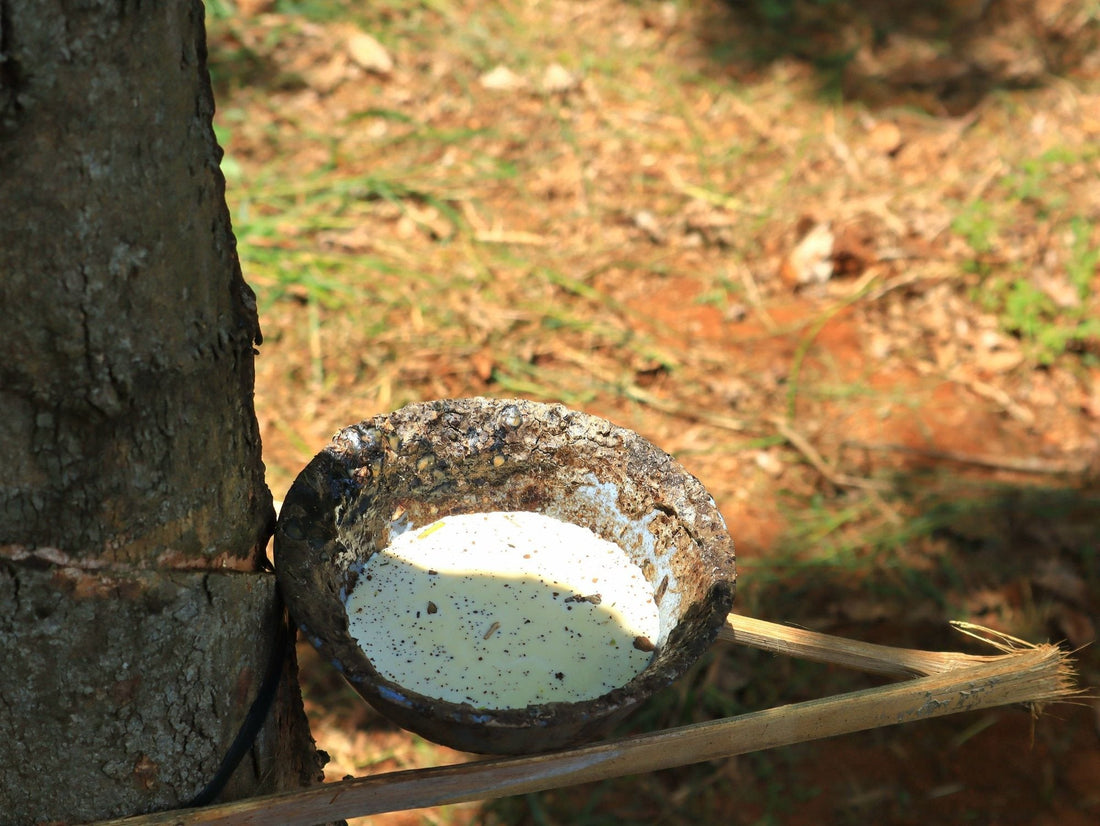
Walk through any Malaysian rubber estate and ask the manager about his fertiliser programme. He will describe nitrogen, phosphorus, and potassium inputs with confidence. Ask about magnesium and he will likely mention a secondary programme for younger stands. Ask about sulphur and the question will almost always be met with a pause. Sulphur does not appear in most Malaysian rubber fertiliser schedules because it is not routinely analysed in standard soil tests and not listed in most fertiliser recommendations. This absence is not because sulphur is unimportant to rubber. It is because the agronomic community has simply not made the case clearly enough.
This article makes that case, using the biochemistry of latex production as the starting point and ending with a practical recommendation for Malaysian rubber producers managing sandy, high-rainfall soils where sulphate leaching is a continuous process.
The biochemistry of latex production and why S matters
Latex is synthesised and stored in laticifer cells that form a continuous network through the bark of Hevea brasiliensis. The flow and stability of latex during tapping is not simply a mechanical process. It is a biochemically regulated event in which the integrity of lutoid membrane systems, the activity of antioxidant enzymes, and the redox balance within the laticifer determine how long and how well latex flows before coagulation occurs.
Sulphur-containing compounds are central to this regulatory system. The thiols glutathione and cysteine are part of the antioxidant system of latex and are thought to help protect laticifer membranes from oxidative damage that can lead to early coagulation; methionine, the other sulphur amino acid, is needed for protein synthesis and many metabolic reactions. All of these compounds contain sulphur as a structural element: the sulphydryl group (-SH) that gives thiols their antioxidant function cannot be made without an adequate supply of sulphate taken up from the soil.
Sulphur demand rises with nitrogen supply, because both are built into the same proteins. A programme that pushes nitrogen without a matching sulphur source can leave the tree short of sulphur, especially on leached sandy soils where sulphate is lost before it can be taken up.
Identifying sulphur deficiency on rubber trees
Sulphur is not mobile within the plant. Unlike nitrogen, which can be remobilised from older leaves to support young tissue, sulphur remains bound in structural compounds once incorporated. This means sulphur deficiency symptoms appear first on new growth, not on mature leaves, which is a key diagnostic indicator.
The symptom pattern is specific: whole newly emerging leaves turn yellowish-green and become reduced in size, with necrotic spots at the leaf tip in severe cases. The yellowing is uniform across the leaf rather than interveinal, which distinguishes it from iron or manganese deficiency. In early deficiency, the colour difference between new growth (yellowing) and mature leaves (normal green) is the clearest visual indicator.
In practice, sulphur deficiency in Malaysian rubber is often misdiagnosed as nitrogen deficiency or attributed to general nutrient stress without investigating the specific cause. Leaf tissue analysis, measuring total S content in the youngest fully expanded leaf, is the most reliable diagnostic tool. Interpret the result against the critical range your laboratory or agronomist uses for rubber, and compare symptomatic and healthy trees from the same block.

Why Malaysian sandy soils lose sulphur
Sulphate (SO4) is a negatively charged ion. Unlike positively charged nutrient cations (Ca, Mg, K), sulphate is not held by the negative charges on clay mineral surfaces. It moves freely with soil water and is lost from the root zone through leaching whenever rainfall exceeds evapotranspiration, which in Malaysian rubber zones is the normal condition for much of the year.
On sandy soils with low clay content and low organic matter, the leaching loss of sulphate can be substantial. On coastal sandy soils under high rainfall, these losses add to what the crop removes each year. Without regular sulphur inputs, the pool available to rubber roots depletes over time and the deficiency develops gradually, often over multiple seasons before it becomes visible in the canopy.
Organic matter reduces sulphate leaching by two mechanisms. First, microbial immobilisation of sulphate into organic sulphur compounds temporarily removes it from the leachable pool. Second, organic matter holds a large share of soil sulphur in organic forms that are released gradually as it decomposes. Note that cation exchange capacity holds cations such as K, Ca and Mg, not sulphate, so building CEC does not by itself stop sulphate leaching. SoilBoost EA, a humic acid soil conditioner, supports soil organic matter and nutrient retention; it complements a sulphate fertiliser source but does not replace one.
Incorporating sulphur into the rubber fertiliser programme
The practical solution for Malaysian rubber estates is to select fertiliser sources that contain sulphur as a component. Ammonium sulphate (21% N, 24% S) is the most common dual-purpose input, providing both nitrogen and sulphur in a single application. Single superphosphate (0:20:0 plus 12% S) is another option that delivers phosphorus and sulphur together.
Where fertiliser blending allows, include a sulphate source in the annual programme at a rate set from leaf and soil analysis with your agronomist, allowing more on highly sandy, rapidly leaching soils. Split applications timed to the main growing and tapping seasons reduce leaching losses compared with a single annual application.
Foliar sulphur, as magnesium sulphate or ammonium sulphate at a concentration your agronomist confirms for the crop, can give a quicker correction during visible deficiency, with the response showing in new leaf growth. This does not replace soil application but addresses the immediate deficiency while the soil programme builds the long-term pool.
Where humic acid fits in sulphur management
Evidence that humic acid directly holds sulphate in the soil is limited, so we do not claim it. Its contribution is indirect: by supporting soil organic matter and biological activity, it supports the organic sulphur pool that releases sulphate gradually, alongside better retention of cations such as potassium and magnesium.
Regular application of SoilBoost EA adds humic substances to the soil, supporting nutrient retention as the soil organic fraction develops. For rubber estates on sandy mineral soils where sulphur leaching is a chronic problem, it can complement, not replace, the annual sulphur fertiliser programme. CSB Organico, an organic fertiliser, adds organic matter that supports the soil's organic nutrient pool; it is not a substitute for a sulphate fertiliser source.
Sulphur management in rubber does not require a complete revision of the fertiliser programme. It requires the addition of one measurement, leaf sulphur analysis, to the standard monitoring system and the incorporation of a sulphate source into the annual fertiliser plan.
Related products from Chemiseed
Supporting sulphur nutrition and soil retention in rubber plantations: